
UK Government Urges Businesses to “Lock the Door” on Cyber Criminals
Businesses urged to “lock the door” on cyber criminals as new government campaign launches
A new campaign to provide practical ways for organisations to protect themselves from common online threats.
Cyber Essentials Certification Surges in 2025: What UK SMEs Must Prepare for in 2026
Cyber Essentials certification surged in 2025. Discover what the latest UK data means for SMEs and how to prepare for compliance in 2026.
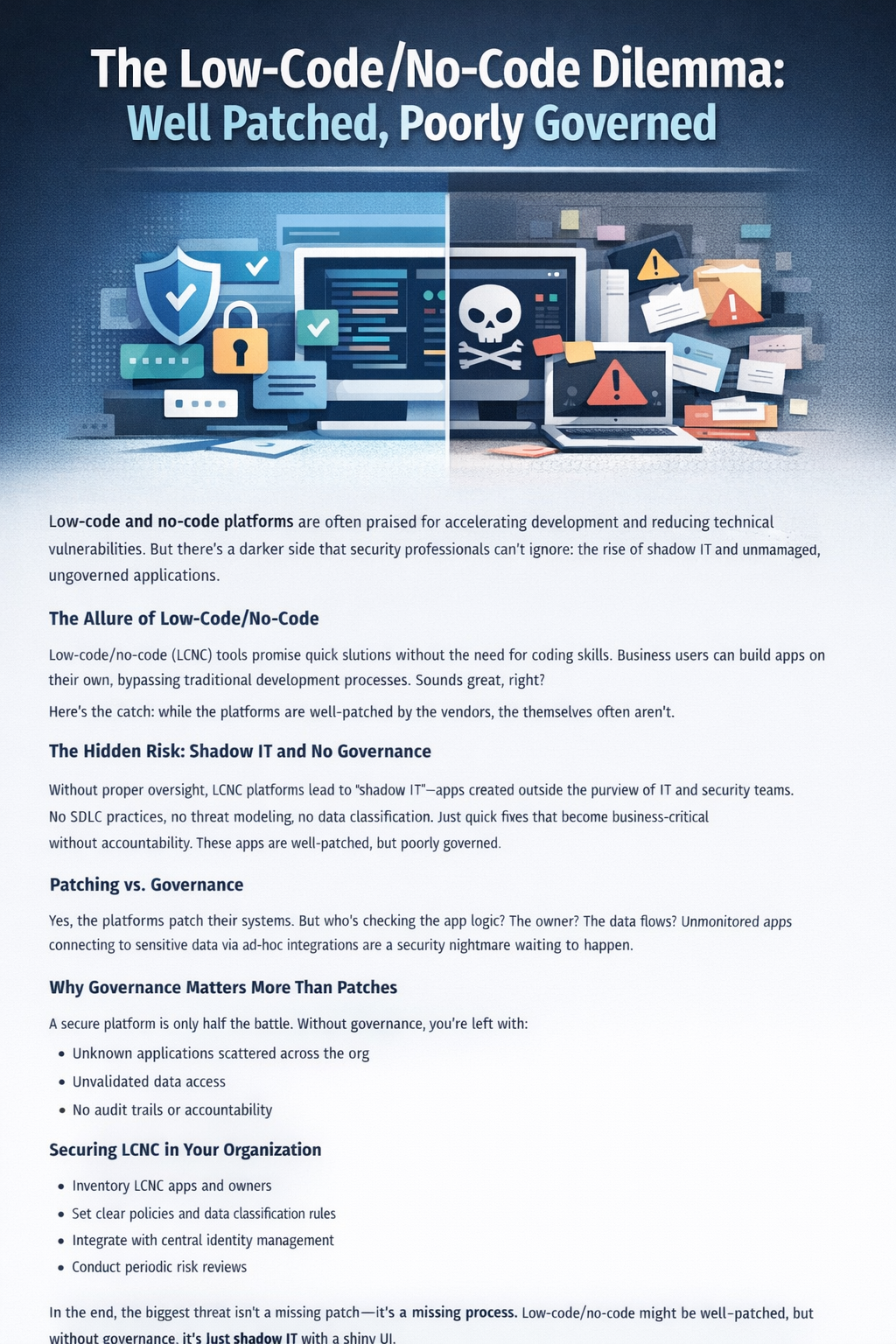
Low-Code and No-Code Platforms: A Growing Application Security Risk for SMEs
Low-code and no-code platforms are often well patched — but poorly governed. This article explains how LCNC tools can quietly increase application security risk through shadow IT, unmanaged apps, and bypassed security controls, and what UK businesses should do to stay in control.
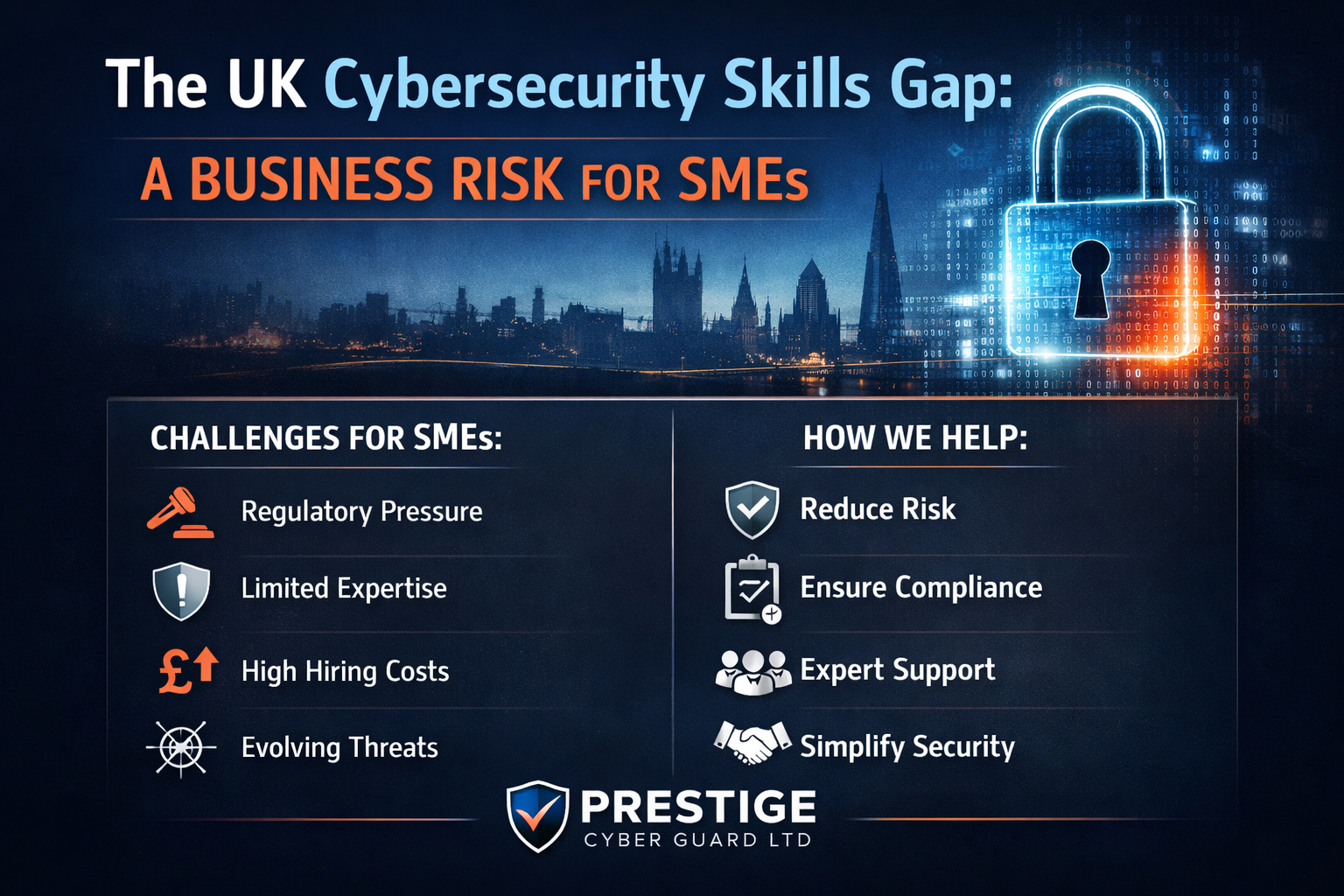
The UK Cybersecurity Skills Gap: Why It’s Becoming a Business Risk for SMEs
UK businesses are facing a growing cybersecurity skills gap, increasing both risk and regulatory pressure. This article explores what the government’s latest report means for SMEs and how clear, cost-effective guidance can help bridge the gap.
UK Government Cyber Security Guidance for Business: What SMEs Need to Know
The UK Government has published updated cyber security guidance to help businesses reduce risk and improve resilience. This short overview highlights what SMEs need to know and how to turn official guidance into practical action.

Cyber Essentials Uptake Continues to Grow Across the UK – Latest Data Highlights Strong SME Engagement
The latest UK Government data shows that Cyber Essentials certifications continue to rise, with more organisations recognising its value in defending against common cyber threats. SMEs, public services, and technology firms are leading the charge, making Cyber Essentials a growing standard for trust and resilience across UK industries.

Why the UK’s New Cybersecurity Laws Matter for SMEs and Critical Services
The UK Government’s new Cyber Security and Resilience Bill marks a major step in protecting critical services like the NHS, energy, and transport from cyber threats. For the first time, key suppliers — including IT and managed service providers — will be brought under stricter regulations to improve resilience and incident response. This move underscores a clear message: cybersecurity is no longer optional, it’s essential to national and business stability.

Are You Audit-Ready? How to Prepare for a Smooth Security Review
Get your business audit-ready with our practical cybersecurity compliance checklist. Learn how to prepare for a smooth security review and achieve Cyber Essentials certification with Prestige Cyber Guard.

Top 10 Cybersecurity Mistakes Companies Still Make in 2025
Discover the most common cybersecurity mistakes UK businesses still make in 2025 — and how to fix them. Learn from Prestige Cyber Guard’s expert insights on cyber hygiene, risk reduction, and compliance for SMEs.
Inside the Anatomy of a Modern Phishing Attack (And How to Stop It)
Phishing attacks have evolved far beyond fake bank emails. Today’s scams are smarter, faster, and harder to spot — often mimicking real people and trusted systems. In this post, we break down the anatomy of a modern phishing attack step by step, reveal how cybercriminals trick even cautious users, and share practical ways your business can stop them before they succeed.

Prestige Cyber Guard Attends CyberVerse 2025 — Strengthening Cyber Resilience Across the Midlands
Prestige Cyber Guard is attending CyberVerse 2025 at Birmingham Tech Week — connecting with UK cyber experts and SMEs to explore threat trends, resilience, and incident response. We’re committed to helping businesses stay secure, compliant, and confident online. Join us as we strengthen cyber awareness across the Midlands.


ISO 27001, NIST, SOC 2, or Cyber Essentials?
Today, with cyber threats escalating—think ransomware attacks costing UK firms millions annually—choosing the right framework is crucial for business owners like you. This article demystifies ISO 27001, the NIST Cybersecurity Framework (CSF), SOC 2, and Cyber Essentials, providing a clear comparison to help you decide which fits your UK-based operations. We'll cover their purposes, requirements, benefits, and more, tailored to UK contexts like GDPR compliance and data protection laws.
Cybersecurity isn't just an IT issue; it's a business imperative. According to recent reports, UK businesses face an average of 44 cyber attacks per week, with small firms particularly vulnerable. Frameworks like these help mitigate risks, build trust with clients, and avoid hefty fines under regulations such as the Data Protection Act 2018. But with options abound, how do you choose? Let's break it down step by step.

Non-Negotiable: Cyber Hygiene for Modern Teams
Cybersecurity has moved from being a specialist IT function to a fundamental part of business resilience. In 2025, with cyberattacks growing in frequency, speed, and sophistication, cyber hygiene is no longer optional—it’s a core operational requirement for any modern team.
This guide breaks down exactly what teams need to do to meet and exceed the NCSC’s expectations, including a comprehensive cyber hygiene checklist you can start using today.